Hispaniola
Hispaniola is a Caribbean island made up of two independent countries: the Dominican Republic in the east and Haiti in the west. The 640 mile (about a thousand km) long island is the second-largest in the Caribbean.
Christopher Columbus arrived on the island on Christmas Day 1492, on his first journey across the Atlantic. He named it Hispania, in honour of the country he sailed for. Hispaniola became an important outpost for the Spanish in the New World, as they controlled other islands and parts of Central America from there. The natives who they met there were made slaves.
During the 16th century the Spanish started bringing African slaves to the island. They were able to work hard under harsh climate conditions and did not get any of the diseases that Europeans did. Today, most of the island's 20 million people descend from African slaves.
In the 17th century pirates came to Hispaniola and used the island as a base for their raids against Spanish treasure ships. During this period French exploration and colonisation began on the western part of the island. Spain gave up a third of the island to France. It quickly became a centre of trade between Europe and the New World.
Geography and Climate
Together with Cuba, Jamaica and Puerto Rico, Hispaniola is one of the Greater Antilles. It consists of mountain ranges that extend from east to west as well as embedded valleys and plains.
While the lowlands are hot and tropical, the slopes of the mountains are cooler and get much rainfall from the trade winds that constantly that blow across the island. Rainfall varies from 1000 to 3000 mm per year. Hispaniola is often hit by tropical cyclones that cross the Atlantic Ocean on their way to North America.
Development and History
The two countries on Hispaniola have gone through different stages of development. While the Dominican Republic became one of the wealthiest nations of the Caribbean area, with its population receiving an average of 8 000 US dollars of income per year, Haiti stayed poor. The former French colony has not only been controlled by ruthless dictators over the past two centuries but, in addition, has been repeatedly hit by natural disasters.
The Dominican Republic is one of the fastest growing economies of the region. For a long time it has been an important producer of sugar cane, coffee and tobacco, however in the past years it has become a tourist attraction for Americans and Europeans. It offers sandy beaches, round the year golf courses and has recently engaged in ecotourism projects.
Haiti
Haiti became the first black republic in the world. Political violence throughout the last 200 years has left the country without a democratic structure. The government is corrupt. Torture and the killing of political opponents are widespread. Elected leaders have been replaced by dictators more than once. France and the US have intervened in Haiti many times.
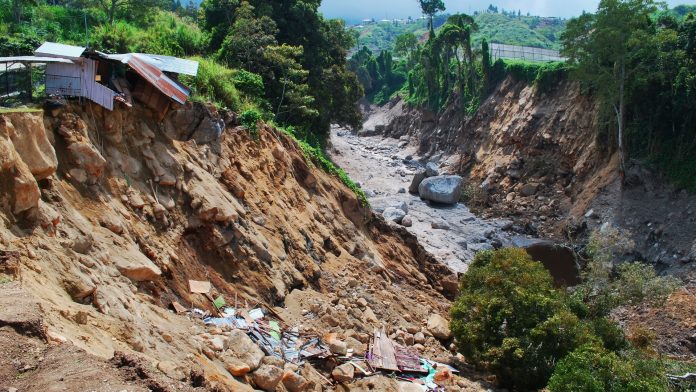
In addition, Haiti's population has been hit by natural disasters. A tropical storm in 2004 left 3000 dead.
In 2010 the country was hit by a strong earthquake, from which it still hasn't recovered. Two hundred thousand people were killed, almost two million were left homeless. While most of the population work in farming, thousands leave the country every year and immigrate to the US or the Dominican Republic, which faces a large refugee problem.